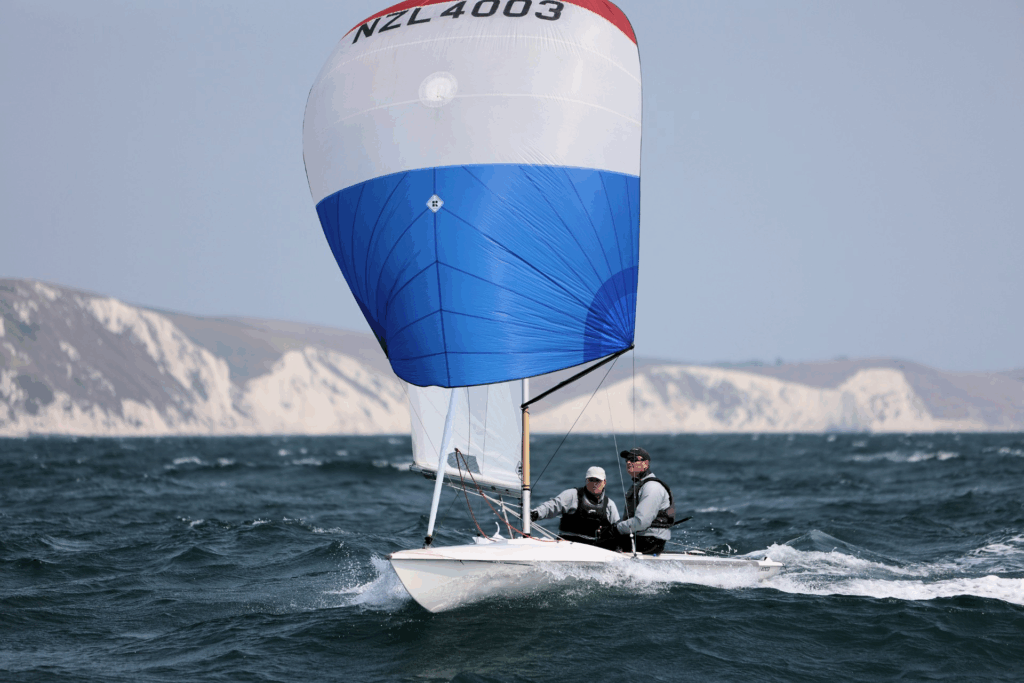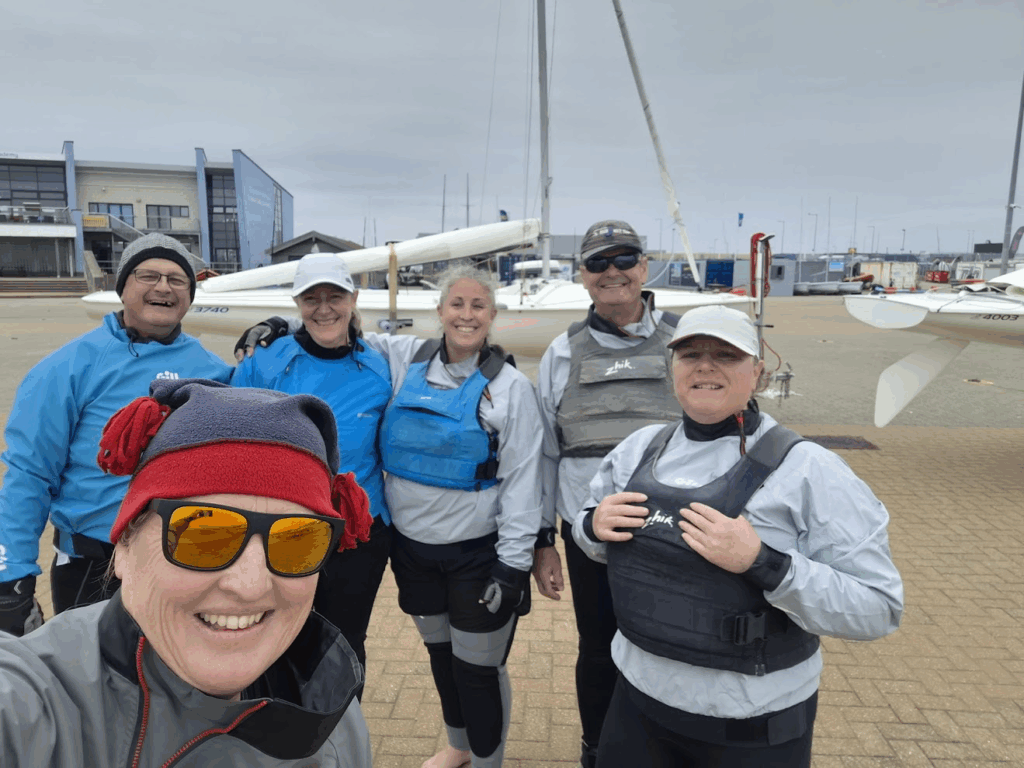
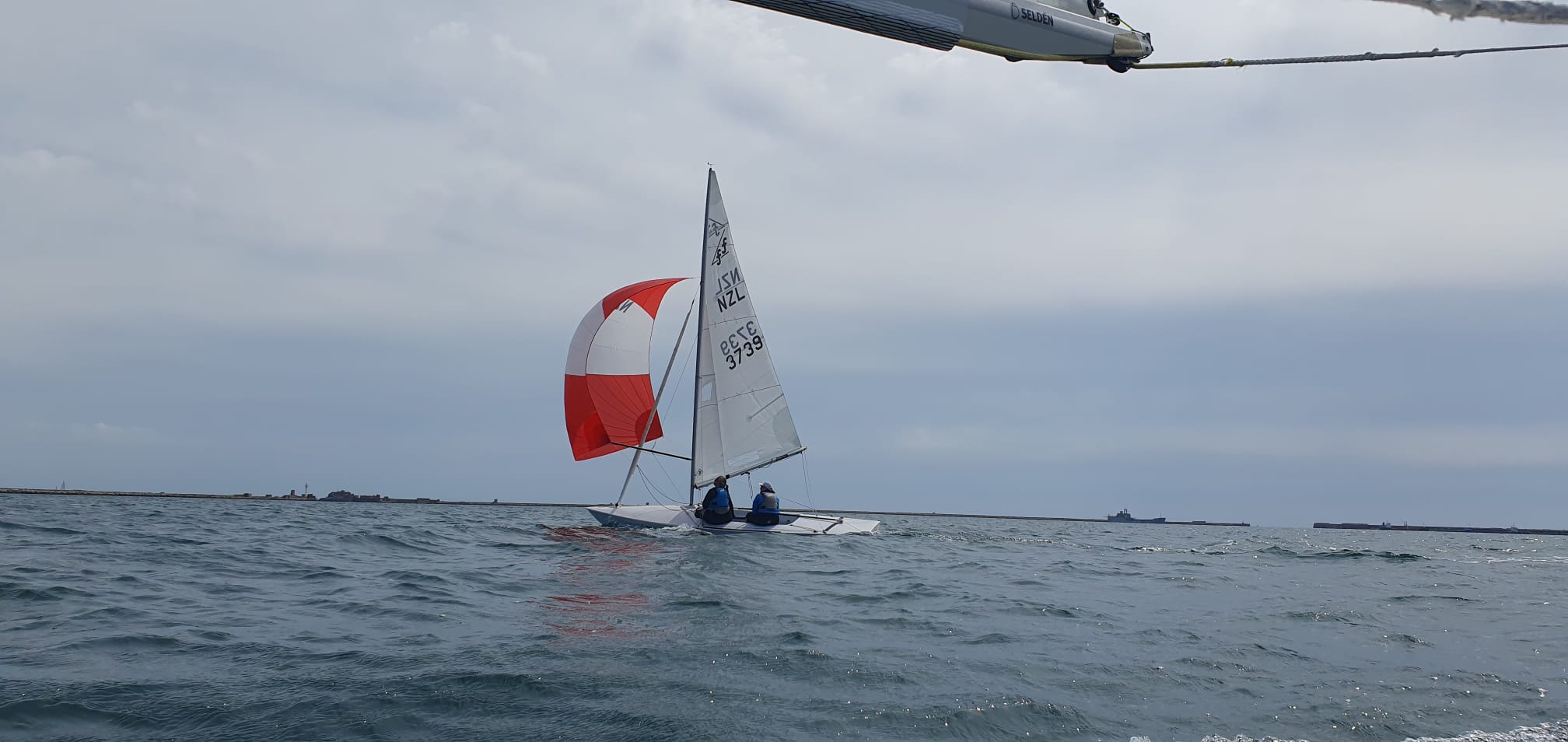
A team of ten sailors recently represented New Zealand at the Flying Fifteen World Championship in Weymouth, UK, with the fleet’s female contingent delivering standout performances.
Leading the charge was Sally Garrett, who finished 22nd overall and won the title of 1st Women’s Helm. She was joined by fellow sailors Sarah Reynolds, Jenny Price, and Alana Pooley, who all represented New Zealand with distinction on the world stage.
A Growing Force in Sailing
This international success highlights a growing trend within the New Zealand Flying Fifteen class, where female sailors are increasingly taking on leadership roles.
- Sally Garrett is a trailblazer in the New Zealand fleet. As the current NZ Flying Fifteen President, she made history in 2024 by becoming the first female helm to win the New Zealand National Championships, sailing The Godfather with crew Neil Easton.
- Jenny Price (helm) and Alana Pooley (crew) are one of the most visible all-female pairings in the fleet. In 2024, they became the first all-female team to finish on the podium at the NZ Nationals, securing third place in Ffortune.
- Sarah Reynolds, sailing with Peter Macartney, has consistently raced at a high level in her boat Flying Cloud, helming in multiple national events from Lake Wanaka to the Bay of Islands.
Why the Flying Fifteen?
The Flying Fifteen, the world’s largest one-design keelboat class with over 4,200 registered boats, offers a unique pathway for sailors seeking competitive and accessible racing. For many women, it has provided the first opportunity to helm or own a boat after years of crewing in other classes.
“The fleet is tough. We’re racing against world champions and Olympic medalists,” says Sally Garrett.
“I didn’t start helming until I got into the Flying 15s,” explains Jenny Price. “It gave me control over my racing and my schedule.”
Key advantages of the class include:
- Affordability: A competitive secondhand boat can be found for under NZD $10,000, making an international campaign possible on a modest budget.
- Strict One-Design Rules: The class’s biggest strength is its adherence to one-design principles. Tightly controlled hull specifications and sail limitations (five sails) keep the racing close and costs manageable.
- Manageable & Supportive: While keelboats can seem physically demanding, the Flying Fifteen is highly adaptable. The setup can be customized for different crew weights, and a strong community culture means help is always available. “I was worried about rigging the boat myself,” one sailor noted, “but it turned out to be fine. There’s lots of support.”
Local Support, Global Ambition
Strong local support has been crucial for preparing teams for major regattas. Shared training and collaborative logistics, like container shipping, have made overseas campaigns achievable.
“We packed five boats into one container for the Worlds,” said Sally. “The Australians had two containers for five boats – different budgets, but we made it work.”
Attending an international regatta is a significant step up. “You go from 10 or 15 boats on a start line to 80+. It’s a completely different game.”
The key takeaway is that the Flying Fifteen class empowers sailors with control. It’s an affordable, competitive, and accessible boat with a global network and a strong local support system, offering a serious racing experience for anyone, from weekend club racers to world championship contenders.
Interested in learning more about the Flying Fifteen class? Contact: [email protected]